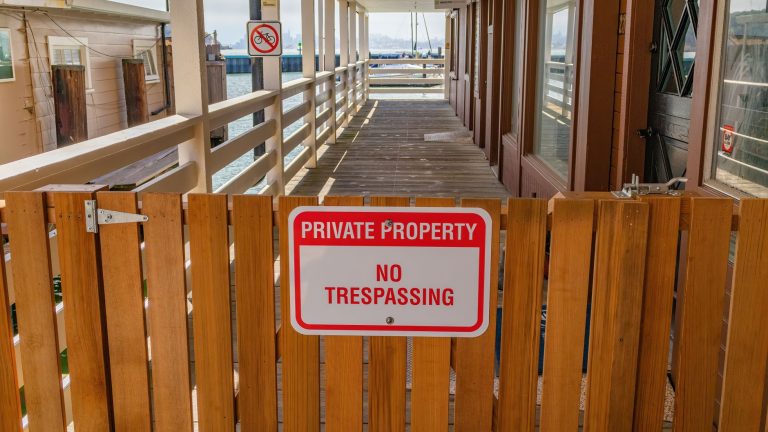

Can you put a gate in a fence on the property line? In France, yes in many cases, but the answer depends on one question first: who owns the fence. A gate in your own private fence is your call. A gate fixed to a shared wall, or placed across a right of way, brings in the neighbor and the Civil Code.
Start with ownership of the fence
According to the Paris firm Kohen Avocats, article 666 of the Civil Code presumes that any fence separating two properties is shared (mitoyenne), unless a title, prescription or a contrary mark shows otherwise. The firm notes that this presumption is a simple one: it can be overturned with a property deed, invoices showing one neighbor paid for the fence, or dated photos.
Walls follow a separate rule. Article 653 sets a presumption of shared ownership for walls between courtyards and gardens, while a wire fence, a wooden palisade or a hedge falls under article 666. Before you plan anything, check which one you have. Our explainer on the shared fence and the rights it gives each owner covers the basics.
A gate in your own fence
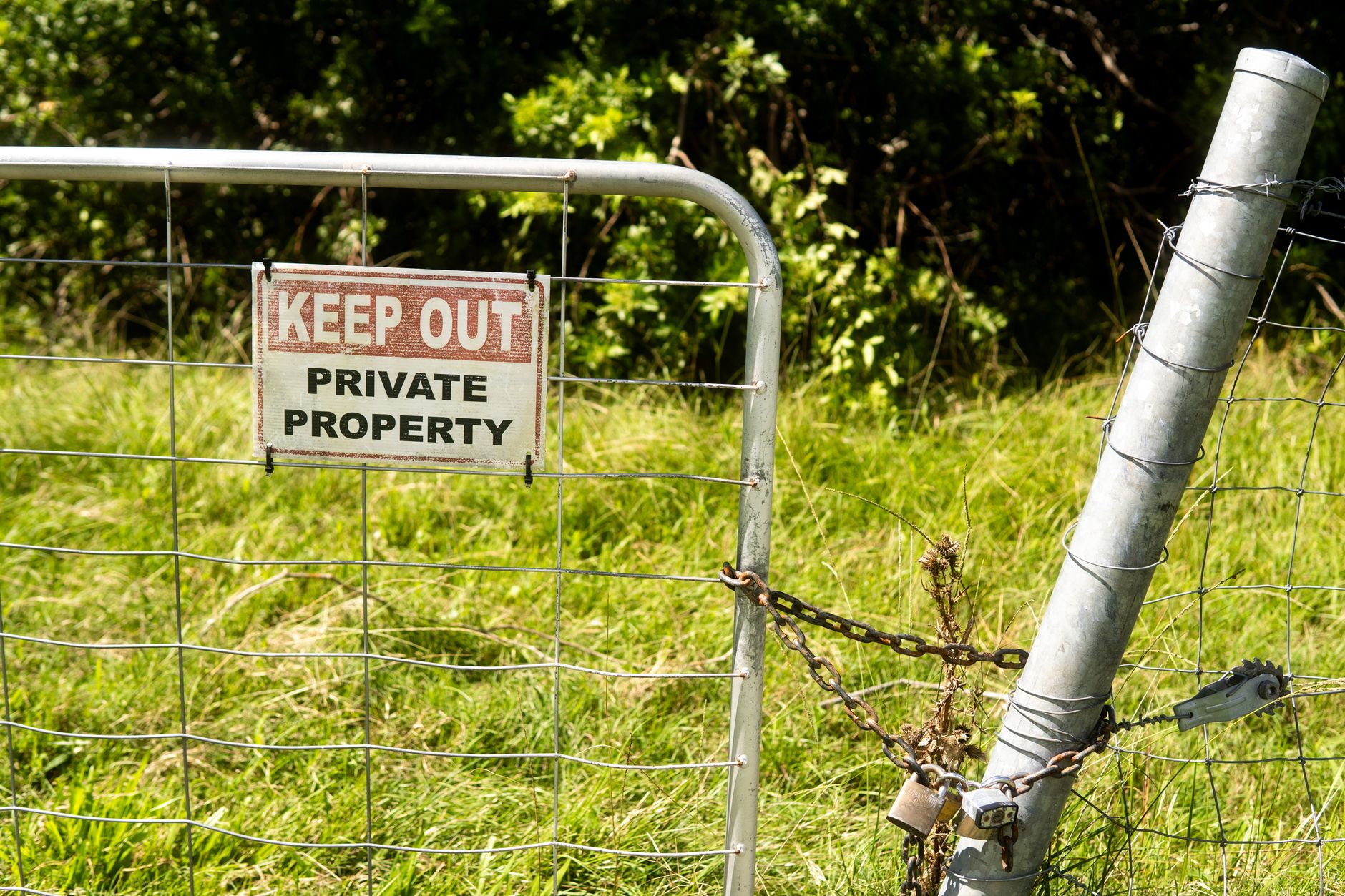
Per Kohen Avocats, article 647 lets any owner enclose their land, with one exception: a landlocked plot (article 682). No neighbor consent is required to build a fence, and the page does not set a special rule for gates. If the fence sits entirely on your side and belongs to you, a gate is simply part of the fence.
Local rules still apply. The firm points to article R*421-12 of the Urban Planning Code, which says certain fences need a prior declaration depending on municipal decisions and protected zones. Check with your town hall before ordering anything. Our guide to maximum fence height and prior declaration in France goes through that step.
A gate in a shared fence or wall
This is where neighbors clash. Kohen Avocats explains, in a separate piece on shared walls, that fixing a gate to a shared wall amounts to leaning a structure on it. In principle that requires the other owner’s consent, preferably in writing (article 662 of the Civil Code).

The cost question follows the same logic. Under article 667, a shared fence is maintained at shared expense. A shared gate is therefore best settled upfront: who pays, who holds a key, who repairs it. The firm’s pages do not lay down a specific rule for a gate in a light shared fence, so a short written agreement between neighbors is the safest route when the fence is shared.
- Private fence, your side only: you decide, subject to local planning rules.
- Shared fence or wall: get the neighbor’s agreement, ideally in writing.
- Fence on a right of way: keep the passage usable (see below).
When the gate sits on a right of way
Justice.fr, the French government’s legal information site, describes the right of passage for a landlocked plot. If your land has no direct access to a public road, the law grants a right of passage across a neighbor’s land. The route can be agreed amicably. It must follow the shortest way to the public road, unless the plot became landlocked through a division of property, and it must cause the least possible harm. The beneficiary owes compensation in proportion to the harm caused.
Without a true enclave, mere inconvenience does not create a legal right of passage. In that case a written agreement with the neighbor is needed, known as a conventional easement. Justice.fr adds that the owner using the passage keeps it passable and repairs damage linked to their use, and that upkeep is shared if the neighbor also uses it.
On the gate itself, one consumer-advice page found in the same research states that a fence with an opening is acceptable if the beneficiary holds a key, while a solid fence that fully blocks the passage is unlawful. Treat that as general guidance, not a statutory text. Justice.fr only says that if the land is no longer landlocked, the neighbor can ask for structures such as a gate or fence to be removed.
Tolerance does not create a right
Years of walking through a gate do not, on their own, create an easement, according to a Paris law firm cited in the research. Justice.fr adds that a passage right born of an amicable agreement can end after 30 years of non-use, and that all evidence is admissible: a bailiff’s report, witness statements, photos. The right is tied to the property, so it passes automatically to a buyer.
If you want to remove or close a gate
Closing or removing a gate that a neighbor relies on is the riskiest move. If the gate sits on a legal or agreed right of way, locking the passage can create a dispute. Justice.fr states that for disputes over use of a passage or the compensation amount, an amicable step comes first: a free court conciliator, a mediator, or a participatory procedure, the latter two being paid. If no agreement is reached, the judicial court where the property sits can decide the location, manner of use and compensation.
Un devis à demander ?
Dites quelle prestation vous cherchez et dans quelle commune : la demande est enregistrée, jamais envoyée automatiquement à une entreprise.
Article 661 offers a related tool: a neighbor can make a private fence shared by reimbursing half its cost plus half the value of the land. Article 667 lets an owner renounce shared ownership of a fence to stop paying for it, so a change of mind is not always blocked.
What this means for you
- Find out whether the fence is private or shared before you buy a gate. Your deed, old invoices and a survey help.
- Put any agreement with the neighbor on paper: location, who pays, who has keys.
- Choose hardware suited to the fence. Our overview of garden gate materials, prices and choices compares the main options.
- If a storm or accident damages the fence, who pays is a separate question; see whether a neighbor owes half after wind damage.
This article is general information, not legal advice. For a boundary dispute or a gate on a right of way, a notary or a lawyer can read your deeds and tell you where you stand.