
France’s environmental agency ADEME has closed its 2026 funding window for new methanization (anaerobic digester) installations as of November 4, according to L’Energeek. For property owners anywhere who are weighing a biogas project, the episode is a useful reminder that funding is only half the equation, perimeter fencing and site security are the other half, and they don’t disappear when a subsidy program does.
According to L’Energeek, ADEME’s official program page confirms the submission window ran from January 1 to November 4, 2026, and is now marked « aide close » (aid closed). The agency received about 1.8 billion euros worth of aid requests against a projected 2027 budget of only 500 million euros, which is what forced the shutdown of new applications, L’Energeek reports. Standard biomethane injection projects had been eligible for 45 euros per MWh PCS, capped at 700,000 euros per project, per the same report.
Who was affected
The program targeted farms, agri-food companies, municipalities and associations, not individual homeowners, with eligible projects concentrated in regions such as Normandy, Hauts-de-France and Nouvelle-Aquitaine, L’Energeek notes. Dossiers filed before November 4 remain under review and ADEME says it will keep processing them. Anyone who hadn’t yet filed is simply locked out of this funding cycle; there’s no announced reopening date, so technical planning can continue but budgeting around the 2026 rates is no longer realistic.
Why this matters beyond France
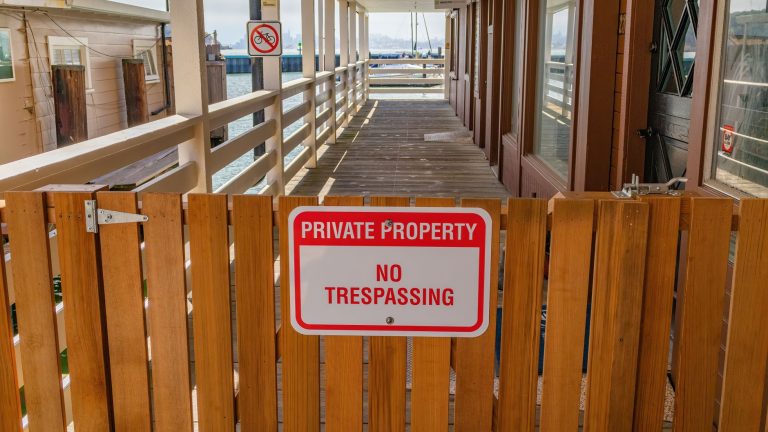
Biogas and anaerobic digestion are expanding on farms well beyond Europe, including in the United States, and the safety case for these installations is identical everywhere. The U.S. Department of Agriculture’s Natural Resources Conservation Service (NRCS) conservation practice standard for anaerobic digesters states plainly that if a digester creates a safety hazard, it must be fenced and posted with warning signs to keep it from being used for anything other than its intended purpose. The U.S. EPA’s safety guidance for on-farm digestion systems echoes this: access should be restricted to authorized personnel, and fencing is one of the primary tools for enforcing that restriction.
The hazard isn’t abstract. Biogas is flammable, can be toxic, and under the wrong conditions, explosive. A fence around a digester or manure storage structure does two jobs at once, it keeps curious family members, visitors or livestock from wandering into a dangerous area, and it satisfies the access-control expectations that insurers, inspectors and conservation programs increasingly ask about before they’ll sign off on a project or a claim.
What a funding gap changes for site security planning
When a grant program like ADEME’s closes mid-cycle, projects that were counting on that money to cover the full build, digester, piping, and the surrounding safety perimeter, often get re-sequenced. Fencing and signage are rarely the first line item cut, precisely because regulators and insurers treat them as non-negotiable, but a funding gap can mean the perimeter goes in with a leaner budget or a longer timeline than originally planned. That’s worth knowing if you’re scoping a similar installation and assuming grant money will cover everything.
If storm damage or a sudden gap in funding leaves a fence around hazardous equipment incomplete or compromised, the insurance side of the equation matters just as much as the construction side, our guide on who files a fence insurance claim and what’s covered walks through what to expect from a carrier. And because biogas sites fall under the same category of hazard sites that security standards bodies track closely, it’s worth seeing how broader perimeter security expectations are evolving, our coverage of what the Expoprotection 2026 safety trophies mean for gates gives a sense of where fencing and gate standards for sensitive sites are headed next.
The takeaway for property owners
Whether or not a subsidy exists, any site handling anaerobic digestion needs a fence that meets recognized standards, clear warning signage, and controlled access points, that’s true under NRCS and EPA guidance regardless of which side of the Atlantic the installation sits on. ADEME’s funding closure doesn’t change those safety obligations; it just removes one source of money that might have helped pay for them. For anyone currently planning a biogas, composting, or similar hazardous on-site installation, the lesson from France’s funding crunch is to budget for the perimeter fence and signage independently of any grant, rather than assuming it will be covered automatically.
Un devis à demander ?
Dites quelle prestation vous cherchez et dans quelle commune : la demande est enregistrée, jamais envoyée automatiquement à une entreprise.