
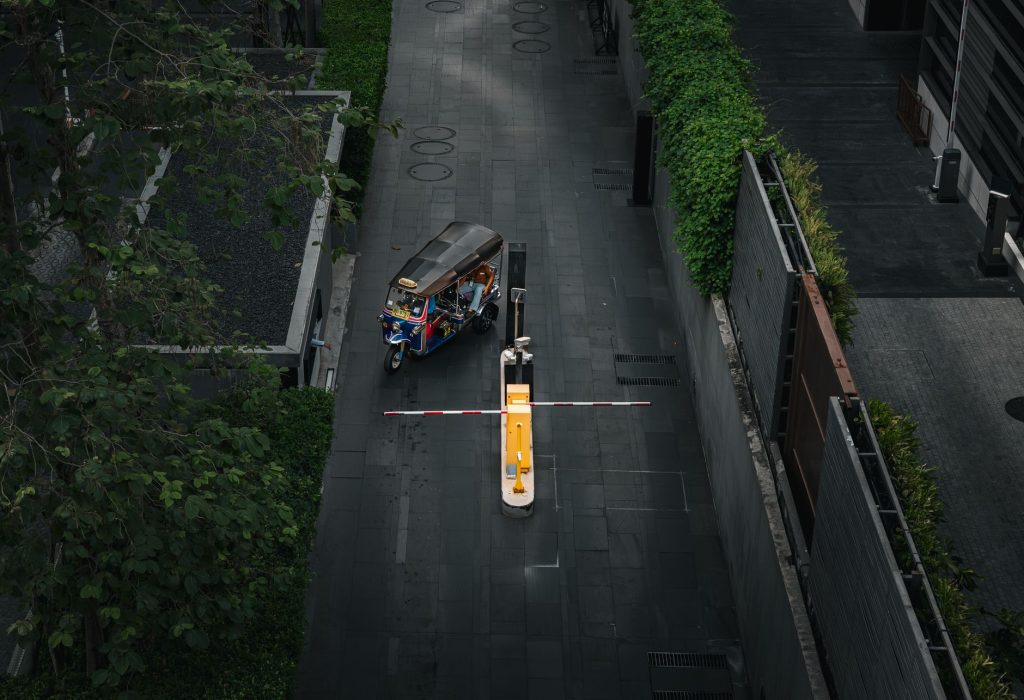
A gate vehicle detector (what French installers call a détecteur de passage portail) is a sensor that tells your gate operator that something is in its path. Two technologies do most of the work: a buried inductive loop that senses metal, and photocells that send a light beam across the opening. Used together, they keep an automatic gate from closing on a car, and they can trigger an opening when a vehicle approaches.
What a vehicle detector actually does
The word « detector » covers two different jobs, and mixing them up is the most common mistake.
- Presence detection: the gate holds open, or reopens, while a vehicle sits in the doorway.
- Entrapment protection: the gate stops or reverses when it meets a person, an animal or an object while moving.
A loop is mainly a presence tool. According to the installation material reviewed for this article, it is typically used to prevent a gate from automatically closing on a vehicle, or to open the gate automatically when a vehicle is leaving a property. Photocells sit on the safety side: a Somfy product sheet says that when the beam is interrupted, the door’s movement stops immediately.

Inductive loops: how they work
A loop is a wire buried in the driveway. According to the U.S. Federal Highway Administration’s material on loop detectors, the loop sets up an inductive field. When a vehicle, or any metallic object, enters that field, the loop’s inductance changes, and the detector unit reads that change as a vehicle.
A complete system has three parts: the loop itself (preformed or cut into the pavement), a lead-in extension cable, and the detector electronics that connect to your gate controller.
Installation points that matter
- Seal the slot properly. One installation guide says saw cuts are typically sealed with backer rod pressed into the slot first, otherwise the wire can float up in the cut.
- Cut the corners at 45 degrees. This reduces stress on the wire and the chance of nicking its outer jacket.
- Solder the connections. The same guide recommends soldering rather than wire nuts.
- Twist the lead-in wires. The guide calls for a minimum of five twists per foot.
Don’t skip the care in this step. According to the Federal Highway Administration, the main sources of loop detector failure are the wire loop in the pavement, its connection to the lead-in cable, and installation issues. In other words, the electronics are rarely what fails. The splice or the cut is.
For exact saw-cut depth and loop dimensions, follow your loop kit’s manufacturer instructions. If you are cutting into concrete or asphalt near a gate post, it is worth having a gate installer do it. If you are planning posts at the same time, see our guide to gate post depth, diameter and installation.
Sensitivity adjustment
Sensitivity is set on the detector unit itself. A guide on loop detectors says that if the detector is missing vehicles, sensitivity is set too low. A jumpy unit that produces false detections needs the opposite adjustment. Toronto’s maintenance specification for traffic equipment lists Sensitivity Level 3 (0.32%) as a normal starting point, though exact settings vary by manufacturer. For a residential gate, treat that as a reference for how these units are tuned, not a number to copy.
Photocells: the other kind of detector
Photocells are the sensor most homeowners already know. A transmitter and receiver face each other across the opening, and anything that cuts the beam registers as an obstruction.
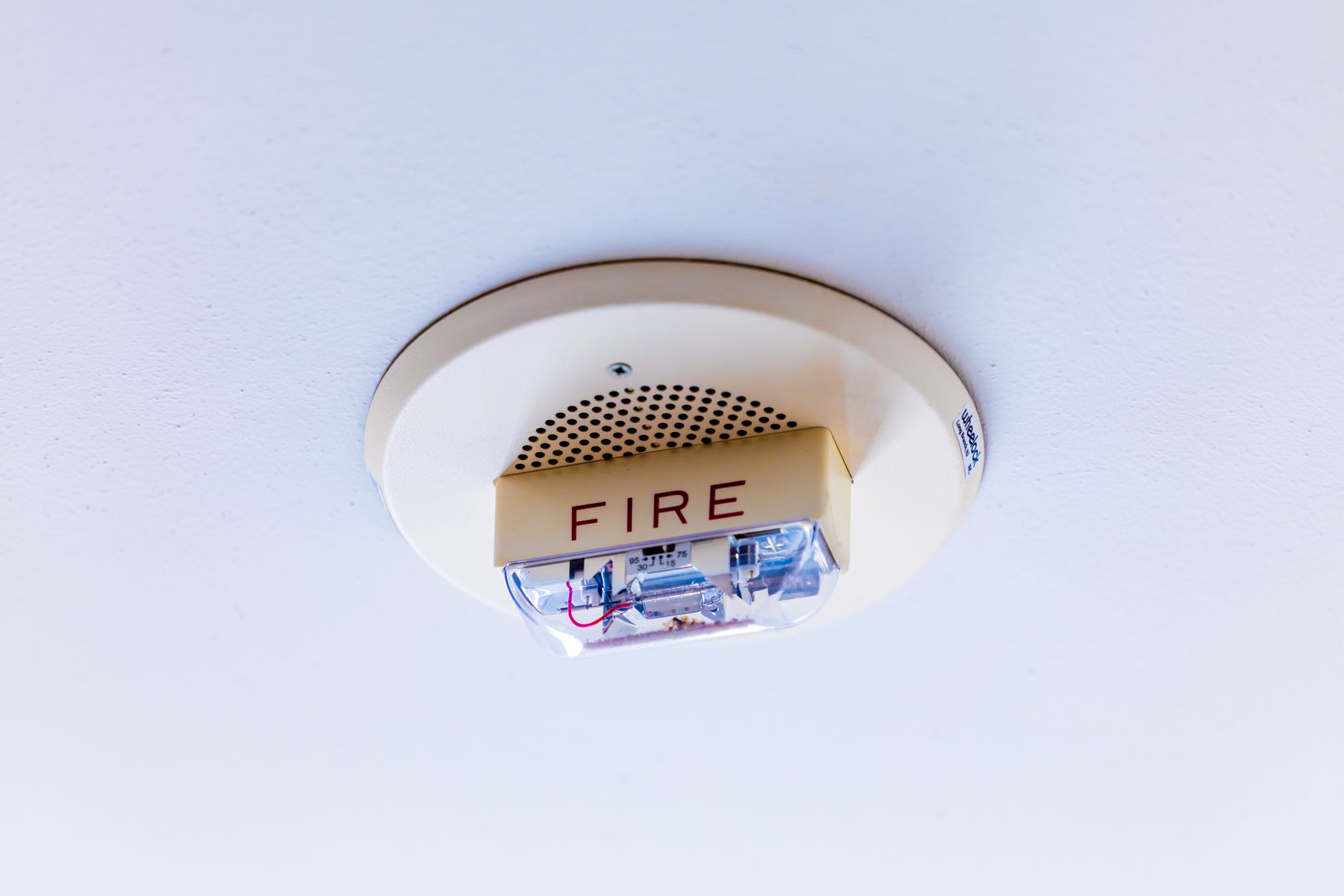
- Range: a Somfy reflection photocell has a maximum range of 12 meters, and it has a self-test input that checks that it is working continuously, according to the Galaxus product listing. A surface mounted, adjustable TAU photocell listed on Usine Nouvelle offers a 20 meter range and 210° of swivel on the horizontal plane.
- Wiring: one French product page notes a set of photocells can be wired in normally closed mode, so that passing in front of them can trigger the opening of the gate.
- Remote control: the same page states that safety photocells are mandatory when the gate is operated remotely. That is a French product page statement, so check the rules in your own country.
Photocells and loops do not compete. A loop sees a car’s metal body even when the beam is blocked by nothing. A photocell sees a child, a dog or a bicycle that a loop would ignore.
What the U.S. rules say
If you are in the United States, the reference is UL 325, the safety standard for gate operators. DASMA, the Door and Access Systems Manufacturers Association, summarizes the key rule: a minimum of two independent means of entrapment protection must be provided in each direction of travel where the risk of entrapment exists.
There is a swing gate exception. If a swing gate system offers no potential for entrapment in the opening direction, then only the closing direction requires a minimum of two means of protection. For horizontal slide gates, DASMA’s reprint of Table 32.2 lists two means in both directions.
Manufacturer manuals add practical detail. A Viking manual says to use only UL Recognized Component edge sensors and photoelectric sensors, and states that an approved monitored entrapment protection sensor is required in all areas accessible to potential entrapment and pinch points. Allen-Bradley, a Rockwell Automation brand, markets its Series 9000 photoelectric sensors for gate entry as UL 325 recognized and UL 508 listed for non-contact vehicle detection in automatic access control.
Loops are generally installed to detect vehicle presence. Confirm with your operator’s manual, and for the full requirements, DASMA says to purchase the standard itself.
Un devis à demander ?
Dites quelle prestation vous cherchez et dans quelle commune : la demande est enregistrée, jamais envoyée automatiquement à une entreprise.
Choosing for your gate type
| Gate type | Typical detector setup | Why |
|---|---|---|
| Sliding gate | Photocells plus an edge sensor, loop optional | DASMA lists two means in both directions for horizontal slide gates |
| Swing gate | Photocells across the opening, loop on the swing path | The leaf sweeps an arc, so a parked car can be struck |
| Driveway exit | Loop to open for a leaving car | Loops are used to open a gate automatically for exiting vehicles |
The type of gate drives most of these choices. Our guide to the sliding gate: installation and price covers how those leaves travel, and the page on swing gate motorization options explains what the operator brings with it. If you are still choosing a product, the aluminum gate price and motorization guide shows what a complete setup can cost.
Troubleshooting a detector that misbehaves
- Gate won’t close: check whether the photocell lenses are dirty or knocked out of alignment, and whether a loop is reading something parked or stored over it.
- Gate reopens by itself: a loop with sensitivity set too high can react to vehicles in the next lane. Lower it a step at a time.
- Vehicles not detected: raise sensitivity, then inspect the splice between the loop and the lead-in cable, since that is where failures cluster.
- Intermittent faults after rain or a freeze: suspect the wire or its connection rather than the detector unit.
Work on a motorized gate involves moving parts and mains power. Cut the power before you open any control box, and call a qualified installer if you are not sure how your operator is wired.